🔬 Create RAG-ready knowledge bases from websites using Apify, Gemini & Supabase
⚡ 368 views · 🔬 Document Extraction & Analysis
💡 Pro Tip — HTTP Request scraping tends to break when sites update their markup. If you’re scraping a major platform, check if ScraperNode covers it — it has maintained scrapers for LinkedIn, Instagram, TikTok, YouTube, and 20+ other platforms that return structured data.

Description
Convert any website into a searchable vector database for AI chatbots. Submit a URL, choose scraping scope, and this workflow handles everything: scraping, cleaning, chunking, embedding, and storing in Supabase.
What it does
- Scrapes websites using Apify (3 modes: full site unlimited, full site limited, single URL)
- Cleans content (removes navigation, footer, ads, cookie banners, etc)
- Chunks text (800 chars, markdown-aware)
- Generates embeddings (Google Gemini, 768 dimensions)
- Stores in Supabase vector database
Requirements
- Apify account + API token
- Supabase database with pgvector extension
- Google Gemini API key
Setup
- Create Supabase
documentstable with embedding column (vector 768). Run this SQL query in your Supabase project to enable the vector store setup - Add your Apify API token to all three “Run Apify Scraper” nodes
- Add Supabase and Gemini credentials
- Test with small site (5-10 pages) or single page/URL first
Next steps
Connect your vector store to an AI chatbot for RAG-powered Q&A, or build semantic search features into your apps.
Tip: Start with page limits to test content quality before full-site scraping. Review chunks in Supabase and adjust Apify filters if needed for better vector embeddings.
Sample Outputs
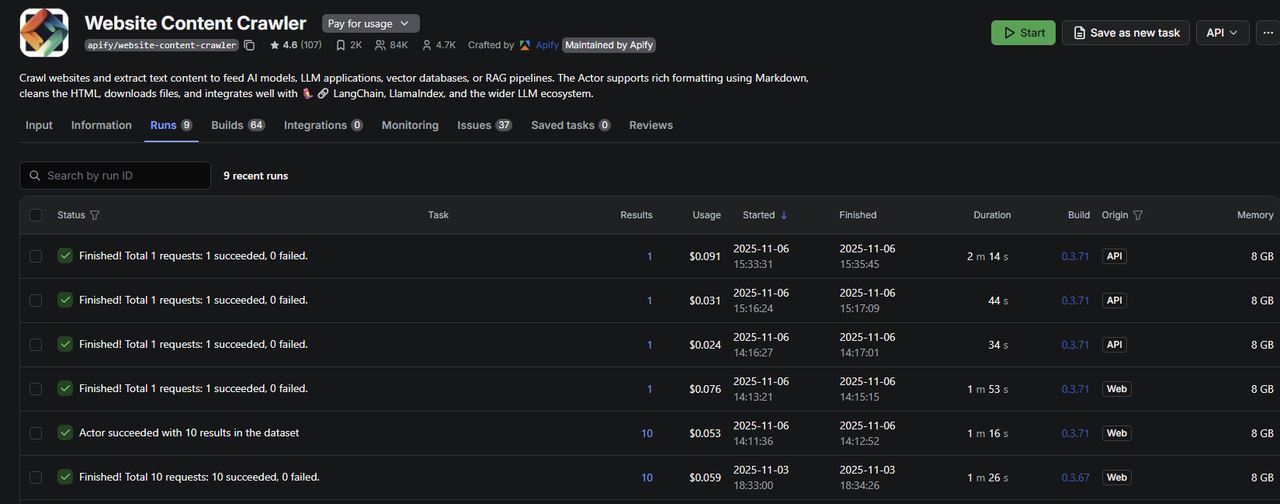
Apify actor “runs” in Apify Dashboard from this workflow
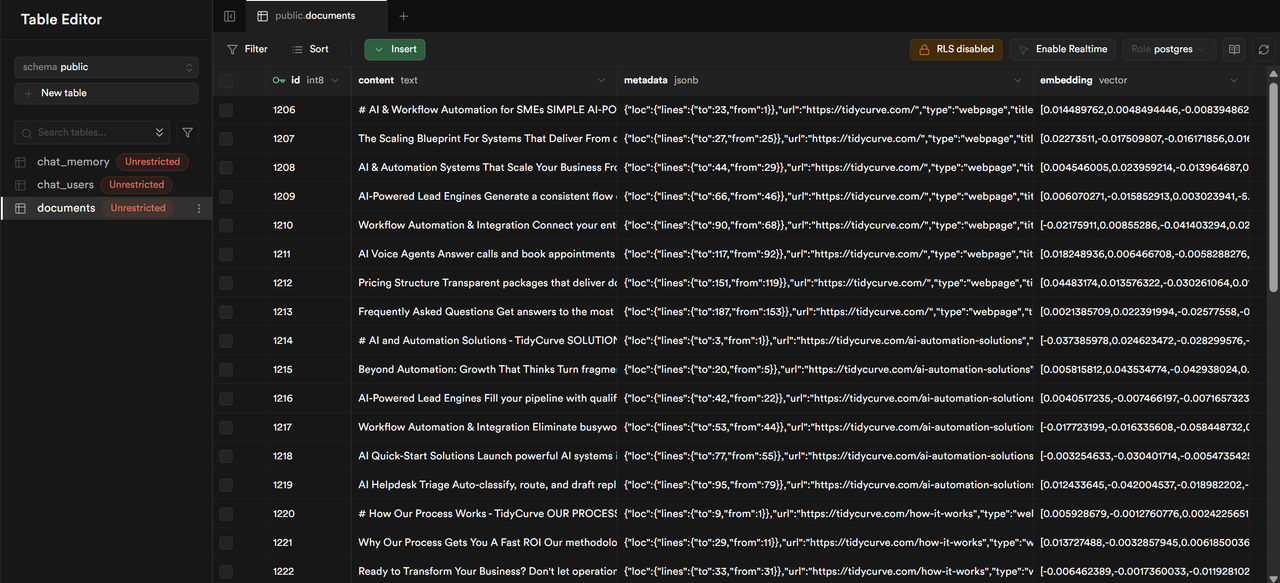
Supabase docuemnts table with scraped website content ingested in chunks with vector embeddings
🔗 Nodes Used
HTTP Request, Recursive Character Text Splitter, n8n Form Trigger, Supabase Vector Store, Default Data Loader, Embeddings Google Gemini
📥 Import
Download workflow.json and import into n8n:
Workflow menu → Import from File